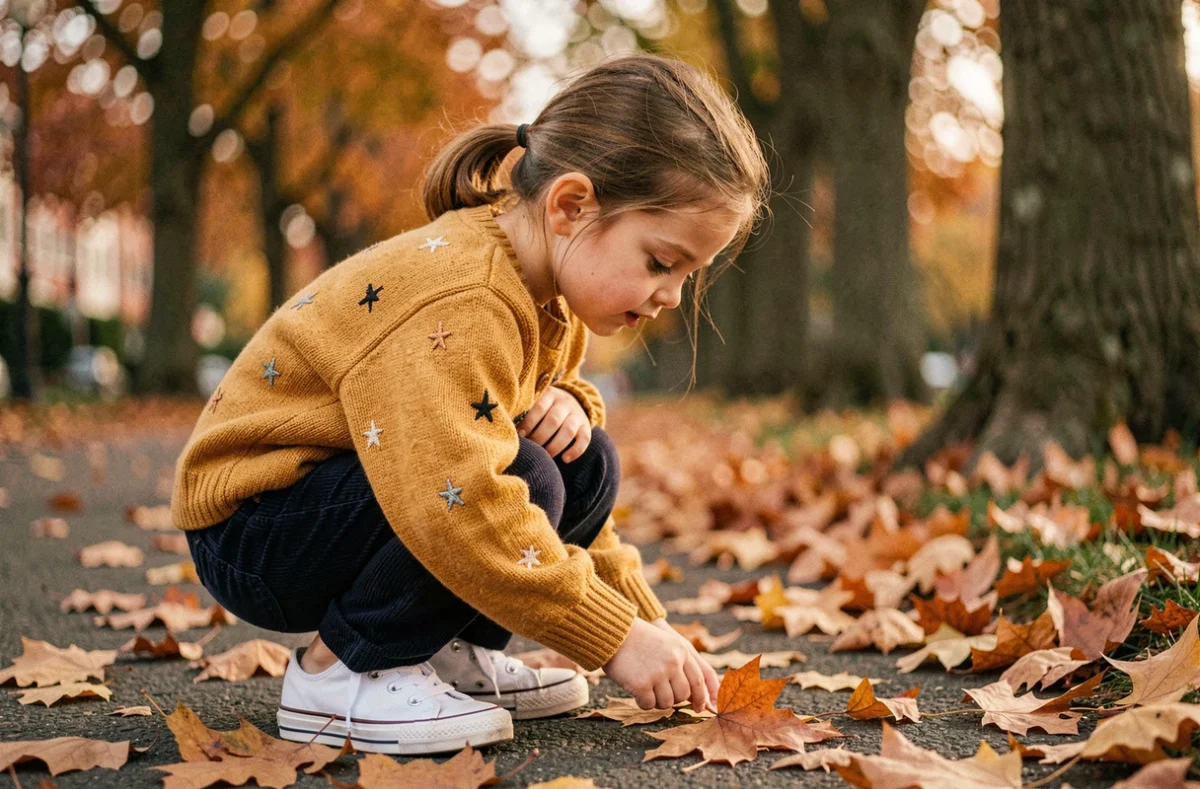
Choosing children’s clothing that stands up to daily wear without resembling a playground uniform presents a real challenge. Between materials that pill after three washes, cuts that restrict movement, and pieces that appeal to parents but not to children, there are many criteria to consider. This article compares materials, cuts, and recent regulatory constraints to identify what really works.
Textile safety standards for children: what regulations require in 2026
Content about children’s fashion rarely discusses the legal constraints governing clothing for the youngest. However, these standards directly influence the choice of materials and finishes.
The standard EN 14682:2015 prohibits cords at the head and neck for children up to 7 years old. For the 7-14 age group, it imposes strict limits on length and design to reduce the risks of strangulation and entanglement. This is a detail to systematically check on hoods, collars, and pant waists.
On the chemical substances side, controls have been strengthened. Children’s clothing is subject to increased scrutiny regarding flammability, small detachable parts (buttons, beads, appliqués), and the presence of harmful compounds. In France, a law that came into effect in 2026 prohibits PFAS in certain clothing textiles. These perfluorinated compounds, used to make fabrics waterproof or stain-resistant, pose documented health issues.
When exploring the Moon Kidsstore website for children, checking compliance with European standards becomes a useful reflex before any purchase.
| Regulatory criterion | Children up to 7 years | Children 7-14 years |
|---|---|---|
| Head/neck cords | Prohibited | Limited length and design |
| Small detachable parts | Mandatory strength tests | Mandatory strength tests |
| PFAS (France, 2026) | Prohibited in certain textiles | Prohibited in certain textiles |
| Flammability | Enhanced controls | Enhanced controls |
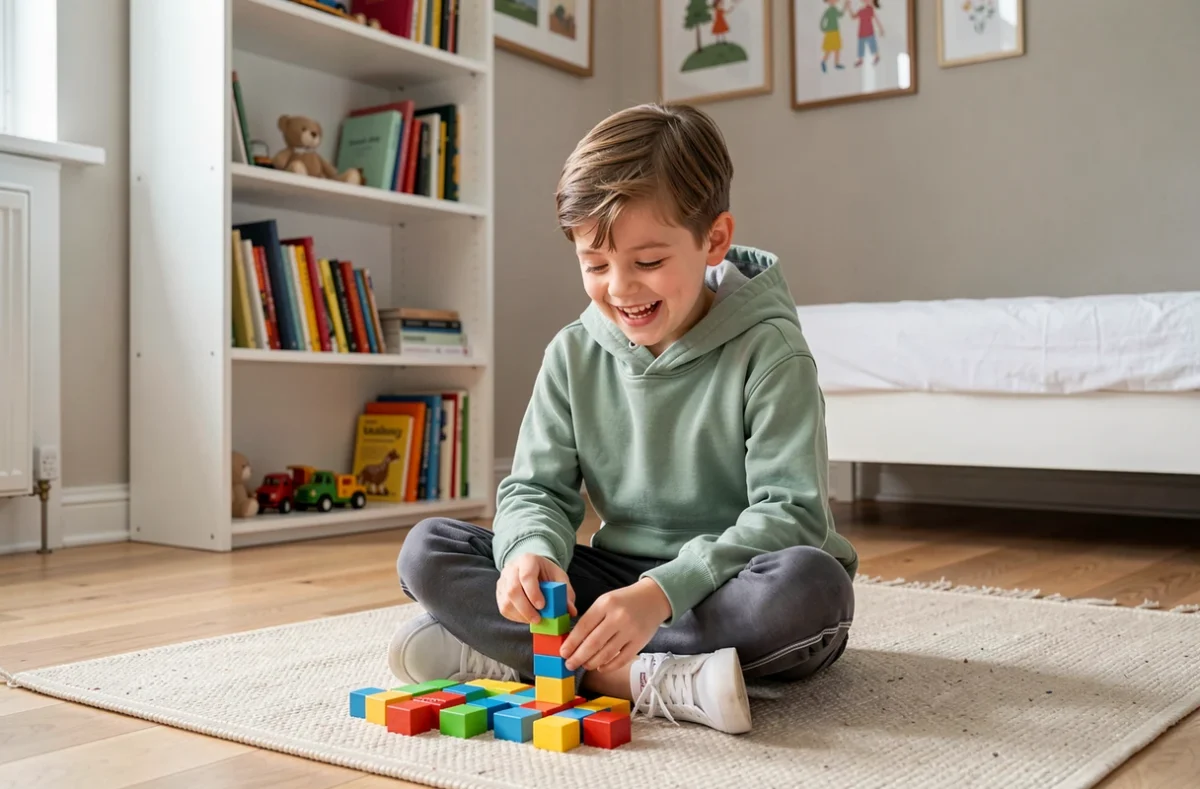
Organic cotton, jersey, fleece: a comparison of materials for children’s comfort
The choice of material determines both the durability of the garment, the child’s comfort, and daily maintenance. Not all fibers are equal depending on the intended use.
Cotton remains the reference for sensitive skin. It absorbs sweat and limits irritation. Organic cotton goes further by excluding synthetic pesticides from the growing process, reducing skin exposure to chemical residues.
Jersey, often made from cotton knit, provides natural elasticity that moves with the body without losing shape. It is the preferred material for t-shirts, leggings, and underwear. Brushed fleece combines warmth and flexibility, ideal for winter sweatshirts and joggers.
Stretch denim deserves a special mention. It retains the aesthetic of classic denim while incorporating a portion of elastane that allows for freedom of movement. For a child who runs, climbs, and sits on the ground all day, rigid denim pants quickly become a hindrance.
- Organic cotton: soft, breathable, suitable for atopic skin, dries slowly
- Cotton jersey: stretchy, lightweight, perfect for everyday outfits in all seasons
- Fleece: warm and comfortable, but can be too thick for mid-seasons
- Stretch denim: durable and stylish, allows movement, easy maintenance
- Recycled fabrics: reduced footprint, variable quality depending on the manufacturer
Relaxed fit cuts and functional clothing: the trend that changes daily life
The trends for 2025-2026 confirm a shift towards pieces designed for play rather than style. The term “relaxed fit” is reappearing in collections: looser cuts at the shoulders and thighs, without falling into shapeless clothing.
A functional garment is recognized by three criteria: it is easy to put on (even by the child alone), it withstands multiple washes without losing its shape, and it does not restrict any movement. Snap closures replace small buttons for younger children. Elasticated waists avoid belts that compress the stomach after lunch.
Personalization is also gaining ground. Children want to choose their patterns, colors, and combinations. A geometric-patterned short worn with a solid t-shirt, wide cotton pants with a structured lightweight jacket: these combinations allow for building a look without sacrificing freedom of movement.
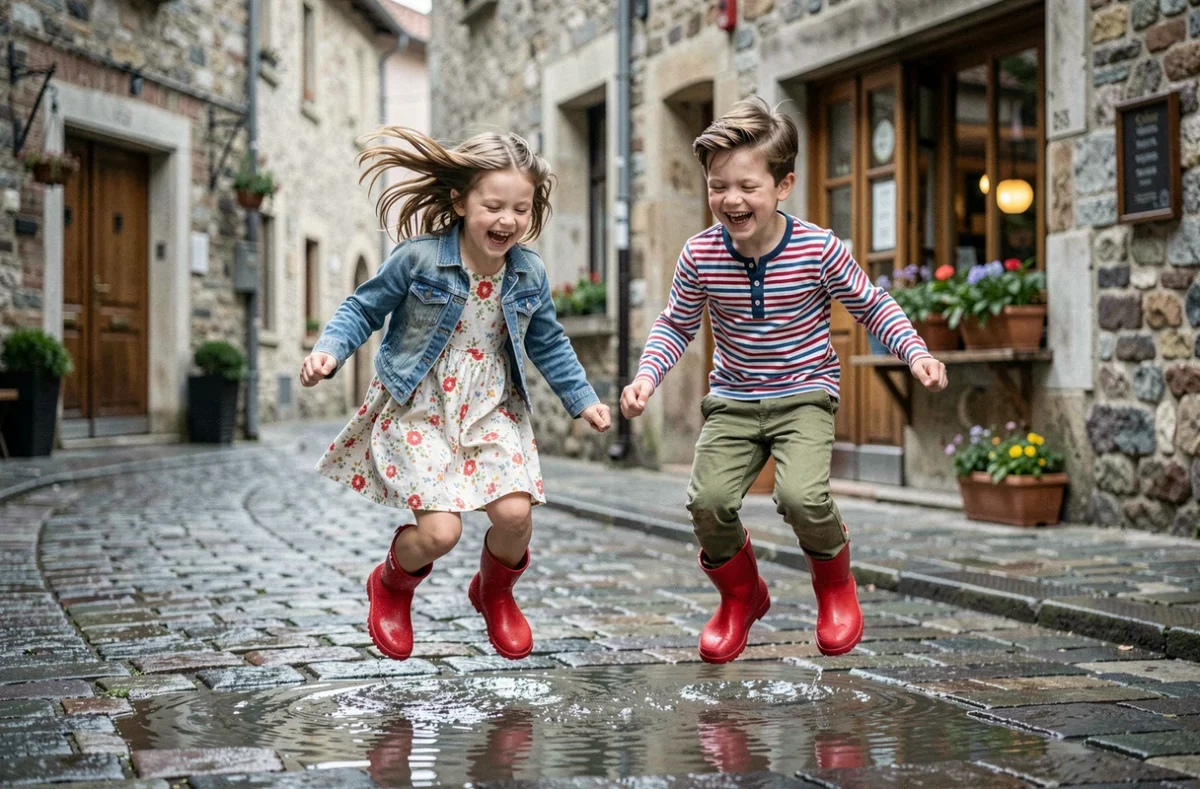
Mixed outfits and capsule wardrobe for children
Reducing the number of pieces by focusing on compatible basics simplifies daily life. Five to seven well-chosen pieces cover an entire week by varying combinations. A neutral jersey pant pairs with several tops. Stretch denim transitions from Monday to weekend outings.
Unisex clothing facilitates rotation between siblings. A gray or navy fleece sweatshirt, beige cotton shorts, a striped t-shirt: these pieces transcend seasons and sizes when the cut is slightly loose.
Children’s clothing without PFAS: a concrete selection criterion
The French ban on PFAS in certain clothing textiles in 2026 transforms a technical subject into a practical purchasing criterion. These substances, long used for their water-repellent and stain-resistant properties, persist in the environment and in the body.
For children’s clothing, this mainly concerns waterproof jackets, rain pants, and certain treated shorts. Looking for the label “PFAS-free” or “PFC-free” becomes a relevant selection gesture, just like checking the composition of cotton or recycled fibers.
Alternatives exist: water-repellent treatments based on wax or silicone offer protection against water without the same risks. The performance is slightly lower over time, but for a child who grows out of clothes every year, the question of the treatment’s longevity is less pressing than for adult clothing.
Dressing a child in style and comfort daily relies on choosing suitable materials, cuts that do not hinder movement, and attention to the standards that now govern the composition of textiles. The French regulation on PFAS adds a concrete selection filter that labels allow you to verify before purchase.