
Getting a reliable answer to a health question requires knowing whom to contact and through which channel. Between national helplines, teleconsultation platforms, online pharmacies, and institutional forums, points of contact with healthcare professionals have multiplied in recent years. Not all serve the same function, and choosing the wrong channel can prolong the response time or lead to an inappropriate interlocutor.
Helpline, medical chat, or form: what each channel actually addresses
A phone number like 3114, dedicated to suicide prevention, responds to situations of psychological distress. It is accessible for free, 24/7, throughout France. The trained professionals who answer can listen, assess, and direct individuals to appropriate resources.
This type of helpline does not replace a medical consultation. If the question concerns an ongoing treatment, a side effect, or a dosage, a health chat with a doctor or pharmacist will be more relevant. Services like BonjourDocteur offer exchanges via chat or email with a medical team, sometimes available every day.
The contact form is suitable for non-urgent requests: information about a parapharmacy product, a question about a common dosage, or a request for nutritional advice. For this type of need, it is possible to contact the Pharmaz En Conseil team directly through their dedicated page, allowing for a personalized response from a pharmacist without going through a call center.
A common pitfall is sending an urgent question via email or form, while a phone call would have produced a response in a few minutes. Conversely, using a helpline for a practical question about a dietary supplement clutters a service designed for critical situations.

Medical teleconsultation: when the general practitioner is not enough
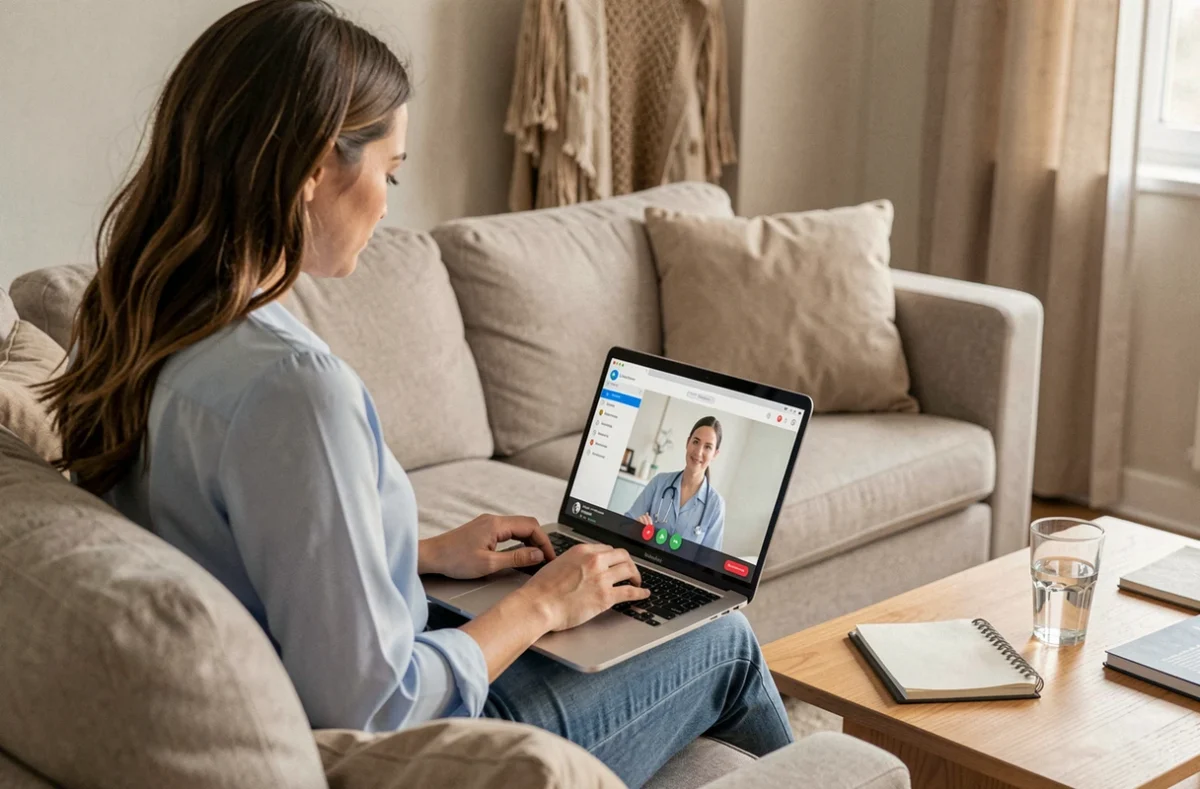
Teleconsultation has expanded access to specialist doctors for those far from a hospital or facing appointment delays of several weeks. Platforms allow for consulting a general practitioner or specialist remotely, via video, from a phone or computer.
This method works well for prescription renewals, dermatological advice via photo, or monitoring a stabilized chronic condition. Its limitations become apparent when a physical examination is necessary: abdominal palpation, lung auscultation, neurological testing.
The regulatory framework requires that teleconsultation be conducted by an identified healthcare professional, under conditions that ensure the confidentiality of exchanges. The patient must be informed of the conditions of the act and consent to it. The report is integrated into the medical record, just like for an in-office consultation.
Preparing for your teleconsultation to obtain a usable response
Listing symptoms in chronological order, gathering recent analyses, and noting current treatments before connecting reduces time lost on framing questions. A doctor in teleconsultation has fewer visual cues than in person: the accuracy of the patient’s description compensates for this limitation.
Photographing a skin lesion, a blood test result, or a medication box allows the practitioner to save time and avoid approximations.
Specialized lines in France: beyond the general practitioner
Public Health France coordinates several remote assistance services, each targeting a specific issue. This specialization ensures that the interlocutor masters the subject, but it assumes that the caller identifies the correct number.
- The 3114 is aimed at individuals experiencing psychological distress, their worried relatives, and those grieving a suicide. It is not limited to suicidal thoughts: a parent, friend, or colleague can call for advice on how to support someone.
- The UNAFAM Family Listening Service, highlighted by the Île-de-France ARS, is provided by clinical psychologists from Monday to Friday. It specifically targets caregivers of individuals with mental health disorders, a group often overlooked by generalist services.
The existence of these specialized lines does not mean they replace medical follow-up. They guide, inform, and support, but do not diagnose or prescribe treatment.
Formulating your health question: what speeds up or slows down the response
The quality of the response largely depends on how the question is posed. A vague message like “I’ve had a stomach ache for a few days” forces the professional to ask a series of follow-up questions before being able to respond.
An effective message contains three elements: the symptom or specific question, the relevant medical context (ongoing treatments, related history), and what has already been attempted or consulted. This structure reduces back-and-forth and allows the professional to respond right from the first exchange.
- Describe the symptom with its location, intensity, duration, and triggering factors
- Mention the medications currently taken, including dietary supplements and over-the-counter treatments
- Specify if a doctor has already been consulted for this reason and what their opinion was
- Clearly indicate what you expect: an opinion, a referral to a specialist, information about a product
The choice of channel also depends on the perceived degree of urgency. Chest pain or acute breathing difficulty falls under 15 (SAMU), not a contact form or chat. Digital platforms complement the care system; they do not replace emergencies.
Using multiple channels for the same question (calling a helpline, sending an email, posting on a forum) does not produce a faster response. It generates contradictory answers and complicates follow-up. A single well-chosen interlocutor, with a well-formulated question, remains the shortest path to a reliable answer.