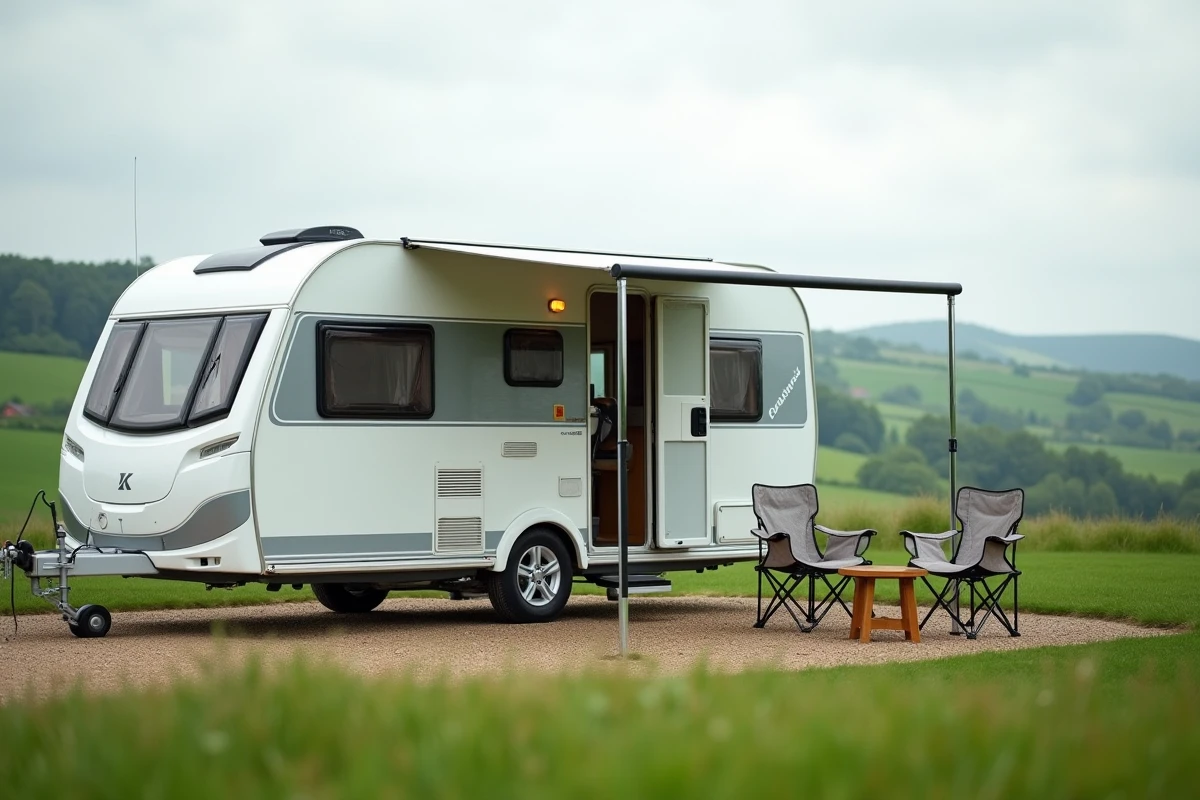
The market for compact 2-person caravans is now segmented according to a criterion that manufacturers often obscure: the actual weight in working order, including batteries and water reserves, as opposed to the stated empty weight. A difference of several dozen kilograms between these two values changes the game for choosing the towing vehicle, especially with a B license limited to 750 kg of unbraked towed weight.
Weight in working order and compatibility with electric vehicles
The distinction between the stated maximum authorized weight (PTAC) and the actual load in road configuration remains the most underestimated technical point. A model advertised under 750 kg can exceed this threshold once equipped with heating, an auxiliary battery, and bedding. We recommend weighing the towed caravan, with a full tank, before any first trip.
The rise of electric and plug-in hybrid vehicles has prompted several manufacturers to rethink the aerodynamics of their compact models. Teardrop shapes and lowered ground clearance reduce drag and preserve the towing vehicle’s range. Tests conducted by ADAC between 2023 and 2024 on lightweight caravans towed by electric vehicles confirm that every additional hundred kilograms significantly reduces the range of the EV, making weight reduction even more critical than with a combustion engine.
Trigano and Bürstner have integrated low-consumption heating systems into their recent ranges that comply with regulations on low-emission zones. These systems replace non-certified gas appliances and allow parking on the outskirts of major cities subject to LEZs, a point that buyers of compact caravans often overlook until they face access denial.
To evaluate the available models and their detailed specifications, a comparison of compact 2-person caravans remains the most reliable way to cross-check weight, dimensions, and standard equipment.
Transverse or longitudinal bed: the decision that affects kitchen space
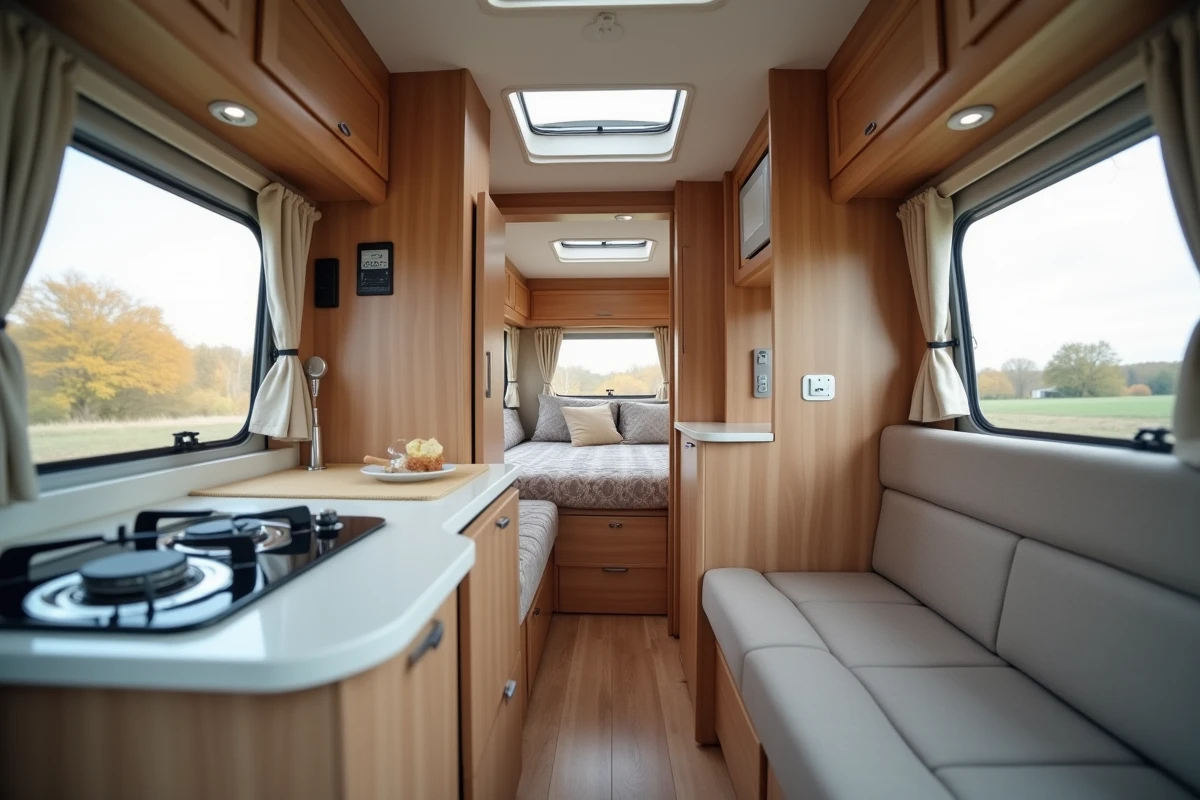
In a caravan less than four meters in usable length, the sleeping arrangement dictates the entire layout. The transverse bed, favored for its width, requires a wider shell and reduces the available space for the kitchen unit and bathroom. The longitudinal bed frees up floor width but constrains the remaining length.
Since the gradual implementation of EU Regulation 2018/858 (which replaces Framework Directive 2007/46/EC), the requirements for emergency exits, ventilation, and fire resistance of interior materials have been tightened. Several ultra-compact models with transverse beds have been withdrawn from the market or redesigned because the emergency window no longer met the new minimum dimensions imposed by this regulation.
We observe that manufacturers who retain the transverse bed compensate by reducing the height of the kitchen unit or by removing the oven in favor of a simple built-in stove. Sleeping comfort improves, but cooking capacity decreases. The decision depends on the travel profile: short camping with external dining, or extended stays in autonomy.
Criteria to check for sleeping arrangements
- The actual width of the mattress once the interior walls are deducted, often less than what the technical sheet states
- The thickness of the standard mattress (entry-level models drop below eight centimeters, insufficient for regular use)
- Ventilation under the bed frame, essential to avoid condensation and mold on the mattress in cold seasons
Comfort equipment: where the budget goes in a compact caravan
In a 2-person model, each option weighs twice: in euros and in kilograms. The compression refrigerator, more efficient than absorption, consumes more electricity and requires a larger auxiliary battery, thus heavier. The instantaneous water heater advantageously replaces the storage tank in smaller models, but its flow rate remains limited.
The integrated bathroom constitutes the primary source of excess weight in a compact caravan. Models that offer a shower and cassette toilet in a closed space add a partitioned structure, a basin, and drainage. Some manufacturers prefer a modular bathroom where the shower deploys over the toilet, a compromise that saves space at the cost of less practical use.

The range of kitchen equipment deserves the same weight analysis. A laminate countertop lightens the caravan compared to the same countertop in sintered stone, without notable functional differences. The number of burners (two are sufficient for duo use) and the presence or absence of a sink with a foot pump rather than electric influences both weight and long-term reliability.
Items to weigh according to travel profile
- Rigid solar panel on the roof or portable foldable: the rigid one is more efficient but adds permanent weight, the foldable adapts to sunlight but requires daily handling
- Integrated awning or removable canopy: the integrated awning speeds up setup, the canopy offers a larger outdoor living space for greater storage bulk
- Integrated diesel heating or electric heating on mains connection: diesel operates in total autonomy, electric depends on a camping socket
Compact caravan and regulations: pitfalls when buying used
The used market is full of attractive 2-person caravans on paper but non-compliant with current standards. The tightening of European requirements on fire resistance of interior materials and ventilation (Regulation EU 2018/858) means that a model produced before the gradual application of this text may pose problems during a technical inspection or when filing a claim with the insurer.
We recommend checking the identification plate (approval number, PTAC, year of first registration) and cross-referencing it with the European conformity certificate. A model withdrawn from the catalog for non-compliance with emergency exits does not regain its compliance with age.
The condition of the floor under the refrigerator and around the bathroom remains the best indicator of the actual history of a used compact caravan. Water infiltration, common in models with aging seals, attacks the wood-insulation sandwich long before it becomes visible on the surface. A moisture meter check in these areas takes a few minutes and prevents structural damage.