
Changing the layout of a room does not systematically increase the efficiency of a space. An ingrained habit can hinder the adoption of a solution that is simpler or less expensive. Some items deemed essential quickly become useless, while small daily adjustments can sustainably transform comfort.
Optimizing daily life does not depend on the budget invested, but rather on a series of choices that are often counterintuitive. A difficult balance is established between practicality, well-being, and organization, far from ready-made recipes.
Why rethinking your interior truly changes daily life
Reorganizing the layout of a home is not just about moving a table or a wardrobe: it involves a deep reflection on the use of each space, safety, and the ability to evolve. For a family, a home designed in advance, where each room finds its function, makes all the difference. No more need to chase after temporary solutions or endure accumulating organizational flaws.
The National Council of the Order of Architects reminds us: integrating a professional from the start allows for anticipating real needs and avoiding costly last-minute modifications. This anticipation gives coherence to your project while limiting unpleasant surprises.
A well-thought-out interior has immediate repercussions: concentration improves, rest gains in quality, and children thrive in an environment that adapts to their needs. When the World Health Organization alerts us to the effects of domestic noise, the idea is not theoretical: a poorly insulated environment causes fatigue, distraction, and stress. Choosing absorbent materials and working on acoustics is an investment in daily tranquility.
The ergonomics of rooms is not a luxury: it is about anticipating and preventing the home from becoming a series of constraints as life progresses. To avoid getting stuck, one can rely on tools like QUALITEL and its housing expertise service Alex, or the CLÉA Housing Information Notebook. These solutions guide the necessary evolutions, step by step.
To complement this reflection, https://maison-info.fr/ offers practical resources and advice tailored to each situation. Rethinking your interior means revisiting the entire way of living at home: from clever storage to compliance, every decision impacts quality of life.
What simple tips can make each room more pleasant and practical?
Improving your interior is about making small adjustments, focusing on effective actions. The first lever: storage. Opt for modular or custom-designed furniture that integrates naturally and leaves room to move around. Here are some discreet solutions that make everyday life easier:
- built-in closets,
- open shelves,
- drawers under the stairs
By combining these tips, every square meter becomes useful and maintenance is simplified. Technical rooms, in particular, benefit greatly from being modular: a folding table in the kitchen, child-accessible storage in the bathroom, a well-thought-out separation between the shower and bathtub for a family routine without bottlenecks.
Acoustic comfort, often neglected, deserves serious attention. Unwanted noise undermines morale and hinders concentration. To enhance sound insulation, prioritize:
- solid doors,
- absorbent coverings,
- thick rugs.
These choices, far from being trivial, change the perception of space on a daily basis. Light also plays a significant role. Prefer warm lighting, combine it with soothing colors or washable paints that are easy to clean and ideal for living areas.
Technology can also simplify home management. With home automation, it becomes easy to automate daily tasks: electric shutters, remote switches, robot vacuums, smartphone or voice assistant control. These devices, far from being mere gadgets, free up time and make life smoother.
Outside, consider installing a sheltered terrace or accessible storage space. An outdoor dining area, usable almost all year round, changes habits and offers new moments of conviviality. All these tips contribute to a home designed to last, adaptable and pleasant to live in.
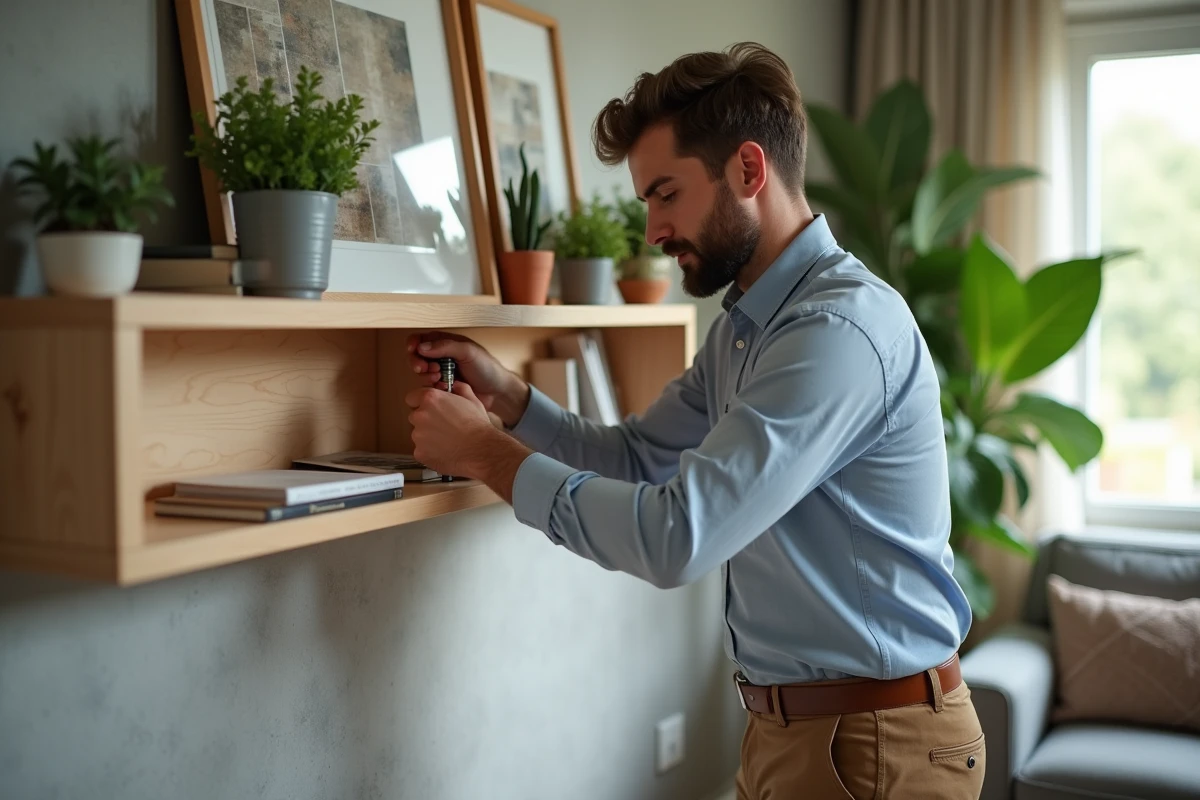
Ideas to share: your small changes that make all the difference
Through exchanges with those adjusting their living environment, one observation stands out: a well-organized home does not arise from a brutal revolution, but from a sum of repeated actions. Organization becomes sustainable when it involves all family members.
The BISOU method, often cited, serves as a guideline: before each purchase, ask yourself about the real utility, prioritize what is truly useful, and limit accumulation. This approach, which goes against impulsive consumption, helps avoid clutter and maintain a serene atmosphere.
Some rely on the 1% rule, popularized by Tommy Baker: each day, dedicate a few minutes to a simple task, such as:
- organizing a shelf,
- sorting a drawer,
- repairing a handle.
This rhythm, almost imperceptible, ultimately transforms the perception of the home. The most organized families share routines where everyone, adults and children alike, contributes to daily management.
When organization becomes challenging, the support of a home organizer can make a difference: this professional rethinks the distribution of space, proposes tailored solutions, and helps declutter. Many draw inspiration from Marie Kondo’s principles: keep only what brings joy, without giving in to the temptation to hold onto everything out of habit or nostalgia. This discipline, far from being superfluous, shapes an interior in harmony with the lives of its inhabitants.
At every step, every detail matters. A repaired handle, a rethought storage solution, a better-chosen light: this is how, little by little, the home transforms into a true ally of daily life.