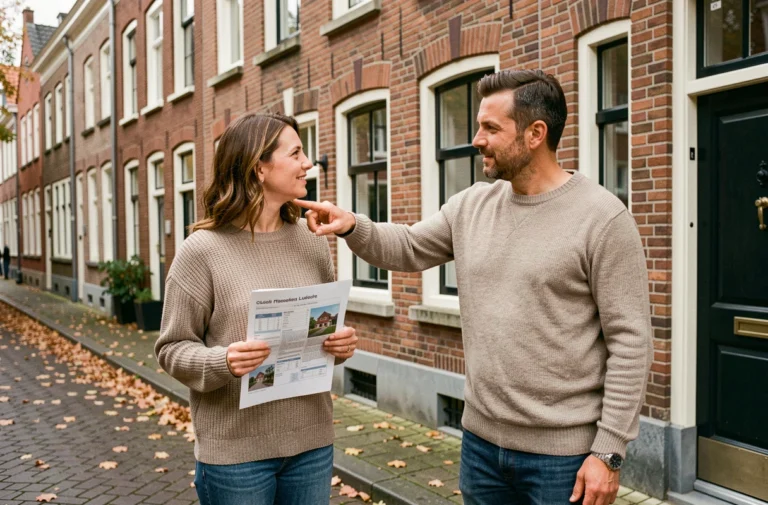
The cost of living in Brittany remains significantly lower than that of major French metropolitan areas, and this is often the primary argument that sways a relocation decision. With a real estate market still accessible despite growing attractiveness, the region offers a rare balance between quality of life, employment, and controlled budgets.
Real estate prices in Brittany: what regional averages don’t reveal
Have you ever compared the price per square meter between Rennes and a town like Guingamp? The gap can range from simple to double, or even more. Brittany is not a homogeneous block in terms of real estate.
The coastal areas of Morbihan or northern Finistère concentrate the highest prices. Conversely, rural municipalities in Côtes-d’Armor or central Brittany offer houses at prices that surprise buyers from Île-de-France.
The average price of new apartments in Brittany was 4,481 euros per square meter over the four quarters leading up to June 2026, down 1.9% compared to the previous period according to DREAL Brittany. This slight correction does not indicate a collapse, but rather a market that is catching its breath after several years of sustained growth.
The PAP Observatory recorded a 17.3% increase in the number of buyers in Brittany in 2025. This figure illustrates a paradox: residential attractiveness intensifies pressure on land, particularly near the coast, while maintaining supply at a reasonable level inland. To better understand the opportunities and cost of living in each area, you can discover the Destination Brittany website which details the economic realities territory by territory.
Cost of living in Brittany compared to the Paris region
Housing weighs heavily on a budget, but it does not account for everything. Food, transportation, and leisure also contribute to the cost difference between Brittany and Île-de-France.
Food and short supply chains
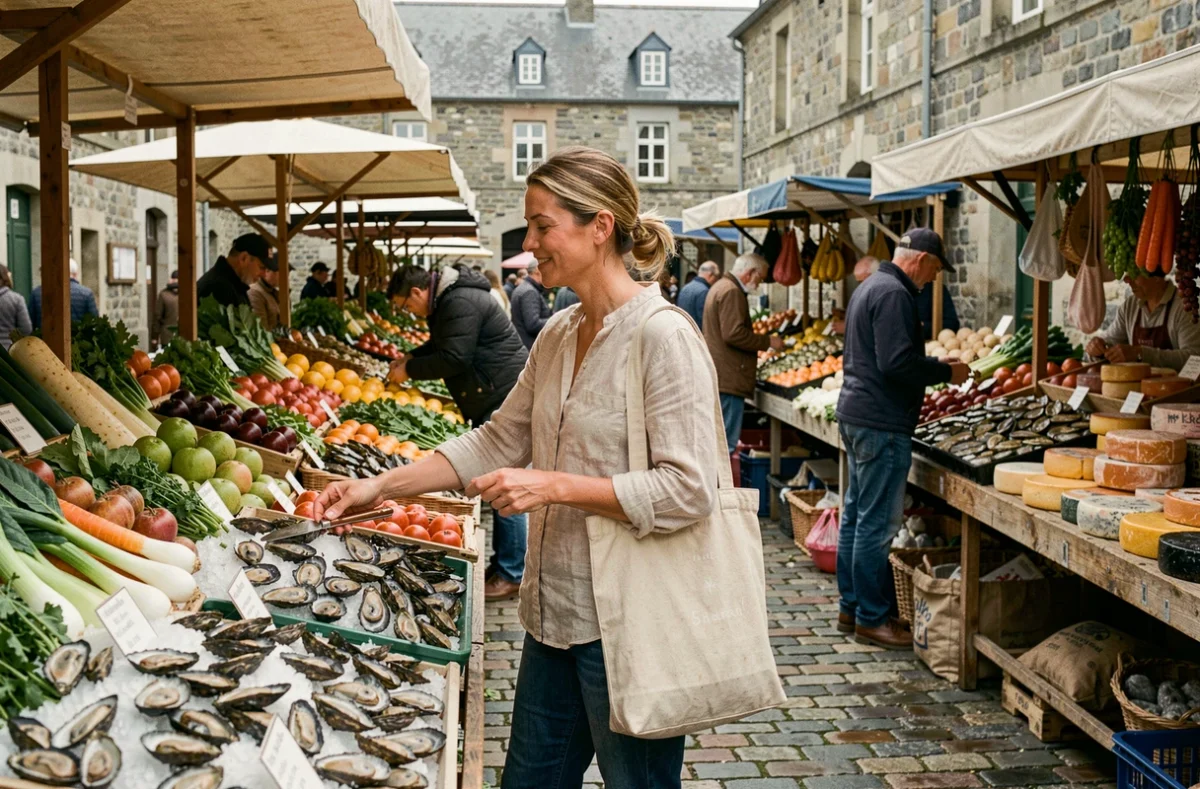
Brittany is an agricultural and maritime territory. Local markets offer fish, vegetables, and dairy products at prices often lower than those in Parisian supermarkets. This is not a trivial detail: on an annual food budget, direct access to producers significantly reduces expenses.
Transportation and daily mobility
The TER network connects the main Breton cities. Rennes is less than two hours from Paris by TGV. Brest has an airport with regular connections.
However, living in a rural municipality often requires two vehicles per household. This automotive cost partially offsets the savings made on housing. The trade-off therefore directly depends on the chosen location.
Fixed charges and local taxation
Property taxes vary greatly from one municipality to another. Some small Breton towns have moderate rates, while tourist coastal municipalities apply higher rates to finance their infrastructure. Before signing, checking the property tax rate of the targeted municipality can avoid unpleasant surprises.
Employment in Brittany: thriving sectors and salary realities
Brittany historically has one of the lowest unemployment rates in France. This data is reassuring, but it deserves to be nuanced according to employment areas and qualification levels.
Several sectors drive the Breton job market:
- Agribusiness remains the region’s largest industrial employer, with groups based in Finistère, Côtes-d’Armor, and Morbihan.
- Digital and cybersecurity are developing around Rennes, which hosts several specialized hubs and attracts technical profiles.
- The maritime sector (fishing, shipbuilding, marine energies) generates skilled jobs along the coast, particularly in Brest and Lorient.
- Tourism and hospitality recruit massively during the season but also offer year-round positions in high-traffic cities.
A point of caution concerns salaries. Breton salaries lag behind those in Île-de-France, sometimes significantly for managerial positions. The gap is partially offset by the lower cost of living, but it needs to be quantified precisely before making a decision.

Breton climate and quality of life: what changes on a daily basis
The Breton oceanic climate is characterized by high humidity and frequent rainfall, that is a fact. In winter, humidity levels can exceed 85%. Winters are mild compared to the Grand Est or Auvergne, but summers remain cool.
This climate has a direct consequence on buildings. Maintaining old houses is more expensive in humid areas: wall treatment, ventilation, roofing. This is a budget item to include in the overall cost of living calculation.
In return, Brittany offers a natural environment that is hard to match. Over 2,700 kilometers of coastline, preserved forests, coastal paths accessible year-round. The associative and cultural life is vibrant: festivals, local events, neighborhood life in medium-sized cities. Human-sized Breton cities facilitate the integration of newcomers, an often underestimated asset.
Between 2016 and 2022, the Breton population grew by an average of 0.6% per year, twice as fast as France excluding Mayotte according to INSEE. This demographic dynamic confirms that the Breton compromise (demanding weather versus accessible quality of life) is sustainably appealing, well beyond the post-lockdown effect that many predicted would be temporary.