You have just received a Zalando package and something seems off: a rough seam, a slightly misaligned logo, a texture that does not meet your expectations. This doubt is shared by thousands of buyers. Knowing how to distinguish an authentic product from a counterfeit on Zalando relies on specific reflexes, applicable from browsing the platform to unpacking the package.
Partner sellers and marketplace: two circuits not to confuse on Zalando
Zalando operates under two distinct models. The first: direct sales, where the platform purchases products from brands and ships them from its own warehouses. The second: the marketplace, where third-party sellers offer their items via Zalando without the platform physically handling the product.
This distinction changes everything. On a product page, look for the mention “Sold and shipped by.” If Zalando appears as the seller and shipper, the risk of counterfeiting remains very low. An item sold by a third party deserves additional verification.
Before confirming a purchase, it is useful to know how to recognize a counterfeit on Zalando by familiarizing yourself with the platform’s commitments and the signals to watch for on each product page.
Third-party sellers go through a selection process, but no filter is infallible. A recent seller, with no reviews, offering branded sneakers at an abnormally low price deserves your suspicion. The marketplace remains a reliable channel in most cases, provided you check these few indicators.
Concrete signs of counterfeiting on branded shoes and clothing
You have received your order. Let’s move on to physical checks.
The packaging and labels
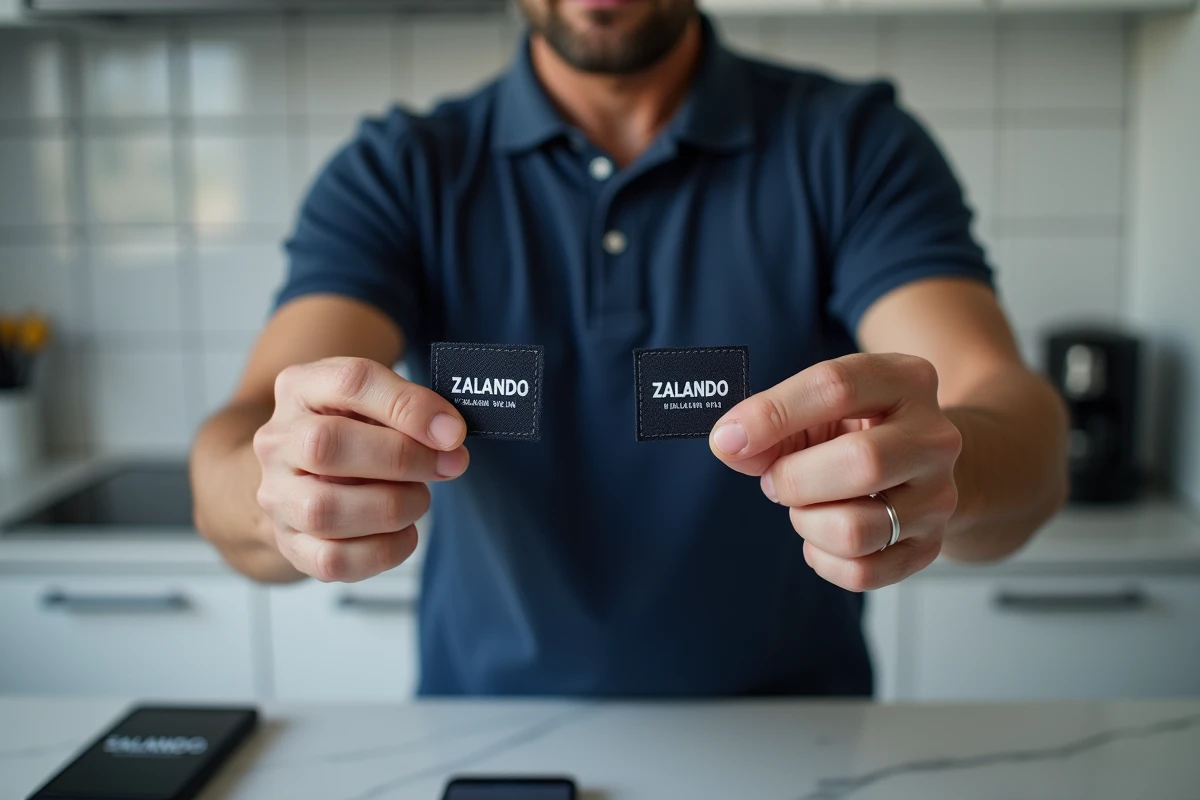
An authentic product arrives in packaging consistent with the brand. For Nike or Adidas sneakers, the box includes a label with a barcode, a product reference, and the size. Compare this reference with the one displayed on the brand’s official site. A difference in numbers or a label stuck askew indicates a problem.
The inner labels of clothing deserve the same attention. A fashion brand pays attention to its finishes even in the washing instructions: regular font, error-free text, neat stitching. A counterfeit often has spelling mistakes or a rough label fabric.
The quality of materials and finishes
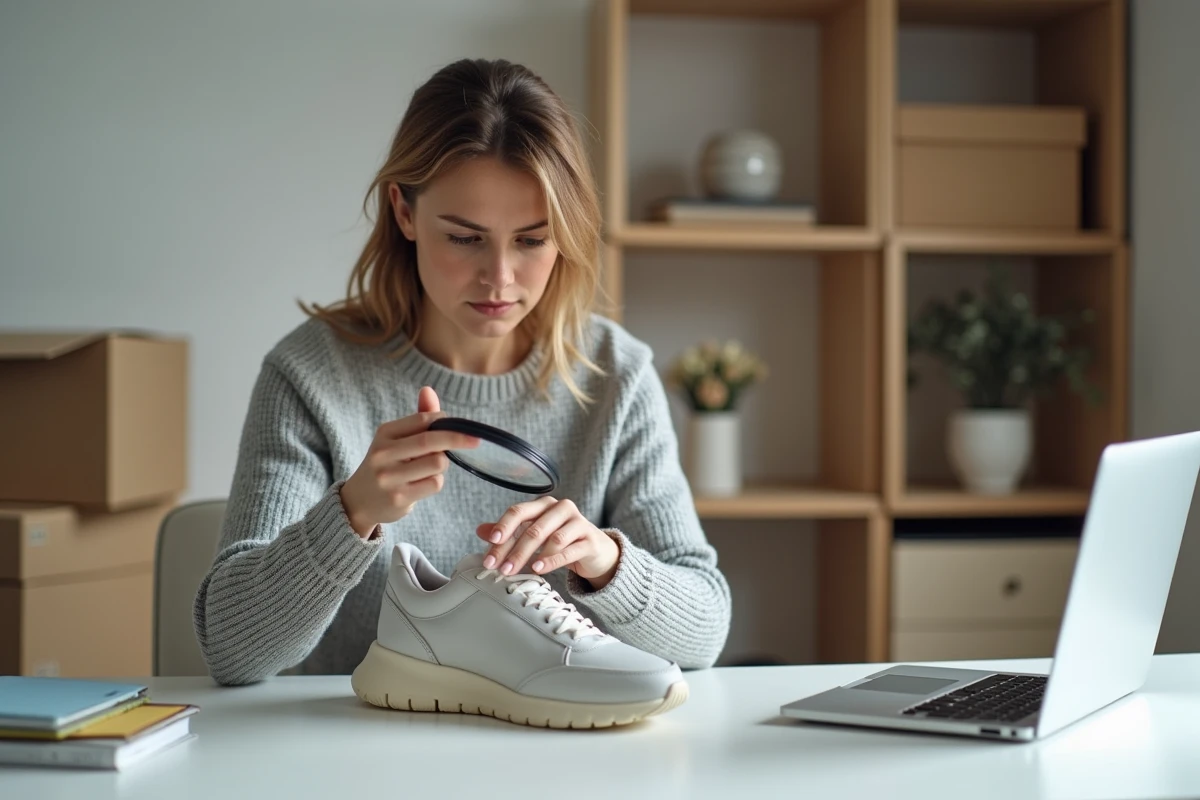
Take the example of a pair of sneakers. On an authentic model, the sole is uniform, the glue is clean, and the stitching is even. A counterfeit often reveals visible glue marks, uneven stitching, or leather that smells like plastic.
- Embroidered logos should be sharp, with no loose threads, and with regular spacing between the letters.
- Brand zippers (YKK on many high-end garments) have their own engraving, which copies often omit.
- The weight of the product matters: a counterfeit is often lighter than the original because the materials used are less dense.
- Authentic sneaker soles have a precise grip pattern, roughly reproduced on the copies.
The price as an indicator
A price that is too low compared to the usual price of the product is the simplest warning signal. Zalando regularly runs promotions, but a discount that far exceeds usual sales on a luxury item or highly sought-after sneakers should raise questions. Always compare the displayed price with that of the brand’s official site.
Reporting and recourse: what the European framework changes for buyers
The European regulation on digital services (Regulation (EU) 2022/2065) has changed the obligations of platforms like Zalando. Specifically, the platform must offer an accessible reporting mechanism and inform the user of the follow-up given to their complaint.
Do you suspect a counterfeit after receipt? Here’s what to do:
- Use the reporting form integrated into your order in your Zalando customer area. The platform is required to inform you of its decision (removal of the product, retention, justification).
- Keep all evidence: detailed photos of the product, packaging, label, and a screenshot of the product page at the time of purchase.
- Zalando offers a right of return. In case of serious doubt, return the item and request a refund even before receiving a response to the report.
This regulatory framework also requires the platform to trace third-party sellers and remove listings reported as fraudulent. Consumers thus have a formal lever, not just a customer service to convince.
Verification tools outside of Zalando
Some brands offer their own authentication systems. Nike, for example, uses QR codes on its inner labels, scannable via the official app. Adidas has a similar system with serial number verification on its site.
Online communities specializing in fashion and sneakers (forums, dedicated groups) can also help. Posting detailed photos of a suspicious product allows you to get feedback from enthusiasts who spot flaws invisible to an untrained eye. Cross-referencing multiple sources of opinions remains the most reliable reflex.
Platforms are also investing in automated detection systems based on image analysis and seller behavior. These technologies spot logo anomalies, price inconsistencies, or dispute histories associated with a seller. The filter is not perfect, but it usefully complements individual vigilance.
Online shopping on Zalando remains generally safe, provided you handle each order methodically: check the seller, compare the price, inspect the product upon receipt, and use the available recourse. Counterfeiting targets rushed buyers. Taking a few extra minutes is usually enough to avoid it.