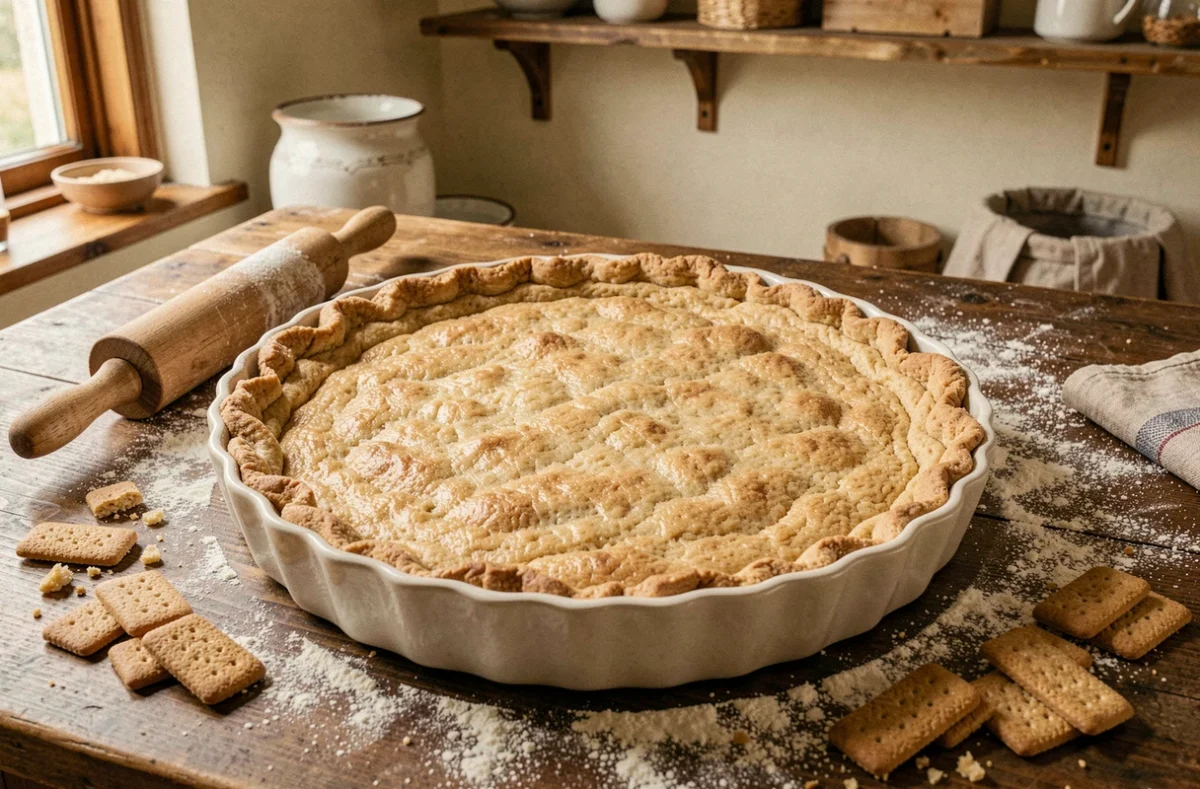
A cake base that cracks under the tooth with the first bite is often what distinguishes a successful dessert from an ordinary one. The crispy biscuit base relies on a simple principle: combining a fatty element (chocolate, praline) with a dry element (crêpes dentelles, crushed biscuits) to create a no-bake base that is quick to prepare and pleasant to the palate.
Why the crispiness softens (and how to avoid it)
Have you ever prepared a perfectly crunchy base, only to find that it lost all its structure a few hours after assembling? The issue rarely lies with the recipe itself.
The moisture contained in the mousse or cream gradually migrates to the crispy base. This transfer is enough to soften the layer within a few hours in the refrigerator. A thin layer of melted chocolate between the base and the filling acts as a hydrophobic barrier. Cocoa butter plays the same role: once set, it prevents water from penetrating the dry layer.
Another common pitfall is placing a still-warm biscuit on a cold surface. Condensation forms underneath and soaks the base even before assembly. The solution is to let the crispy layer rest at room temperature, then transfer it to a rack to allow air to circulate freely. You will also find delicious recipes on Toutes Les Recettes that detail these precautions step by step.
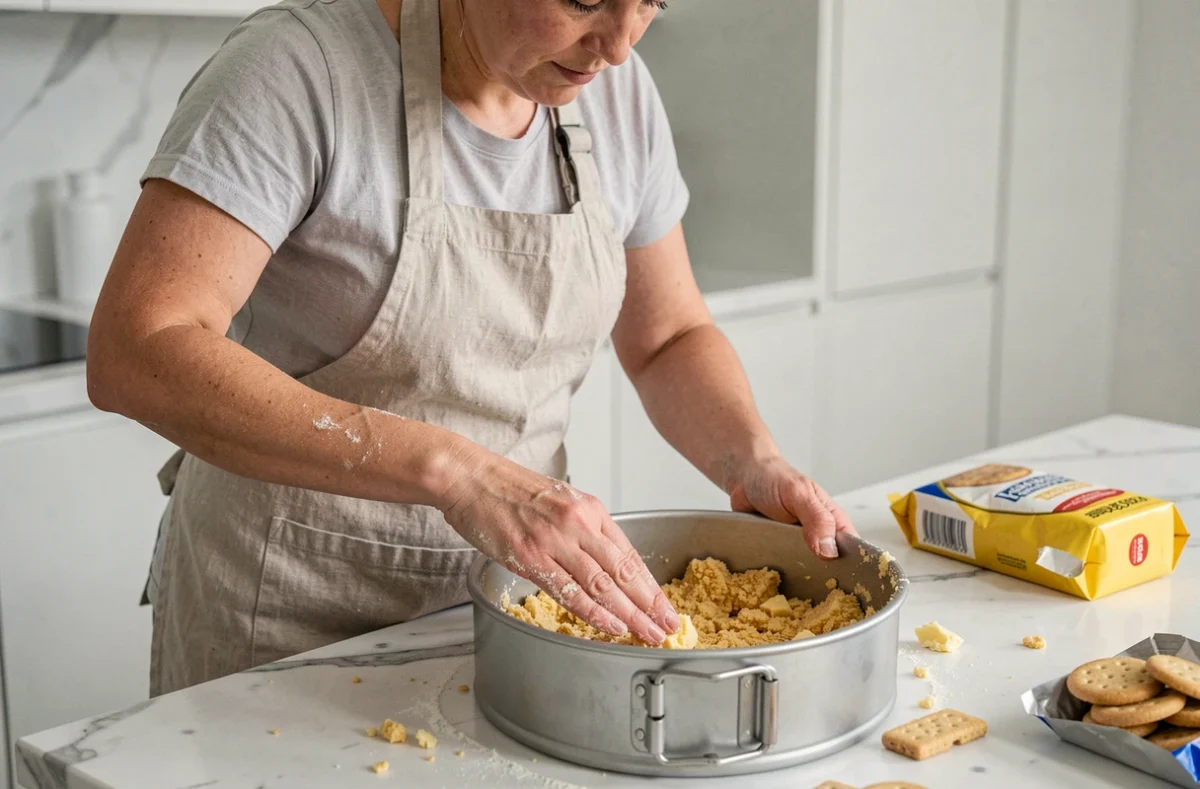
Dark, milk, or white chocolate: the choice of binder changes everything
Chocolate is not only used for flavor. It is the structural binder of your crispy base, and the type of chocolate determines the final firmness of the base.
Dark chocolate, richer in cocoa butter, sets more firmly. It produces a clean, almost brittle crispiness that suits desserts based on light mousse. Milk chocolate yields a softer result, slightly chewy, perfect under a layer cake where the sponge layers require a less pronounced contrast.
White chocolate, on the other hand, remains the softest once cooled. It works well with toasted coconut or dried fruits but may yield a slightly soft base if the amount of crêpes dentelles is insufficient. The basic rule: the sweeter the chocolate, the more you need to increase the quantity of dry elements to compensate.
No-bake praline crispy biscuit recipe
This recipe uses three ingredients, takes just a few minutes to prepare, and requires no baking. It is the most common base in pastry for entremets, logs, or chocolate cakes.
Ingredients for a cake base
- Hazelnut or almond praline: this provides the main flavor and part of the fatty binder. Choose a store-bought or homemade praline with a smooth texture.
- Dark or milk chocolate, melted: it binds everything together and forms the barrier against moisture once set. Adjust the quantity according to the desired firmness.
- Crushed crêpes dentelles (feuilletine): they provide the crunch. Crush them coarsely to maintain texture, not too finely to avoid a compact powder.
Preparation steps
Gently melt the chocolate in a double boiler or in short bursts in the microwave. Add the praline to the melted chocolate and mix until you obtain a homogeneous paste.
Incorporate the crushed crêpes dentelles last, stirring gently. The goal is to coat them without breaking them down further. Spread the mixture in a pastry ring placed on parchment paper, pressing lightly with the back of a spoon to achieve an even thickness.
Place in the refrigerator to allow the chocolate to set completely. The base is ready to receive a mousse, cream, or ganache.
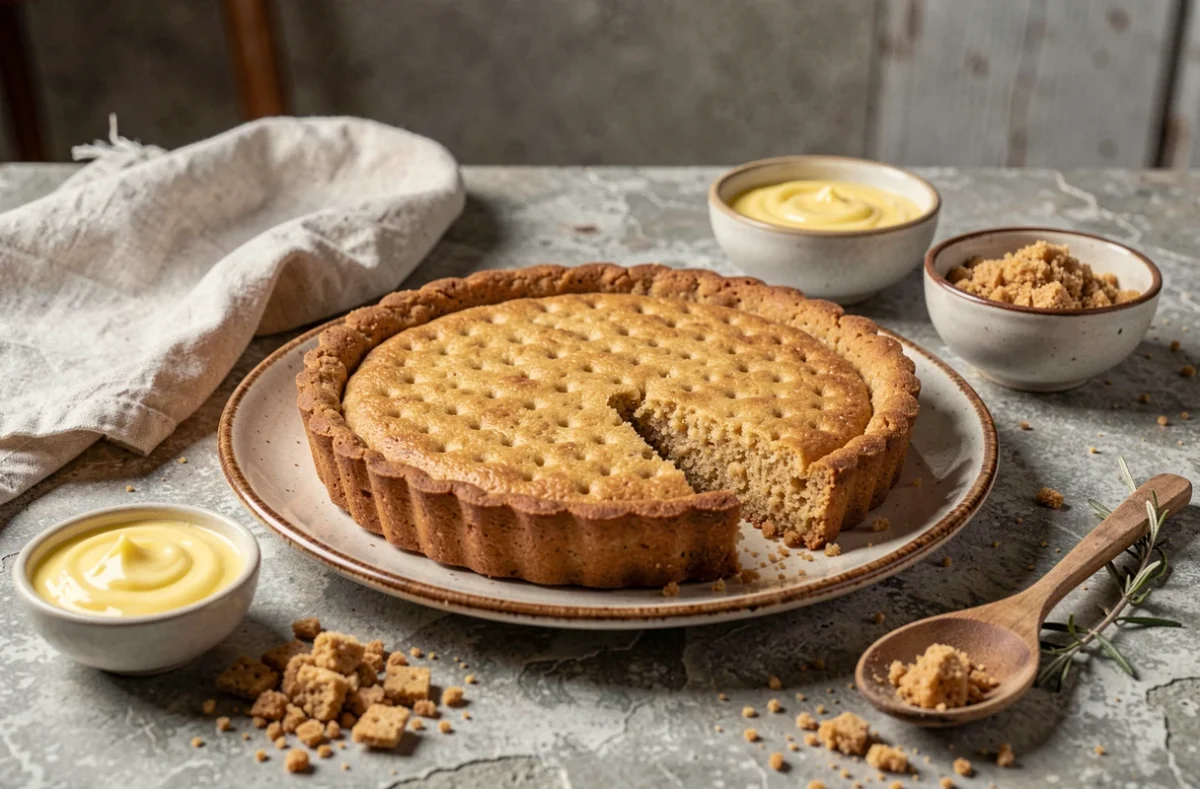
Variations and substitutions to adapt the crispiness
Feuilletine remains the classic choice, but several alternatives work if you can’t find it or want to vary the textures.
- Dry biscuits like sablés or speculoos, coarsely crushed, can replace the feuilletine. The result is a bit more compact, with a pronounced buttery flavor.
- Toasted coconut mixed with praline creates a tropical crispiness, softer than the classic version.
- Crumble (a mixture of butter, flour, sugar, baked) gives a grainy texture reminiscent of a cheesecake base. The crumble absorbs more moisture than feuilletine, so it’s necessary to reinforce the protective chocolate layer.
Whatever variation you choose, the principle remains the same: a fatty element that binds, a dry element that crunches.
Storage of the crispy base before assembly
An unassembled praline crisp can be stored in an airtight container at room temperature for one to two days. The refrigerator is not recommended for a naked base: the fridge’s humidity accelerates softening if the container is not perfectly airtight.
Always assemble your entremet with a cold filling, never warm, to avoid melting the chocolate layer that protects the crispiness. If you are preparing a chocolate cake with a praline base, allow the ganache to cool before pouring it over the base.
For allergens, a praline crisp contains nuts. If you sell your pastries, this information must be clearly stated on the labeling, just like the gluten present in the crêpes dentelles.
The praline crispy cake base is a pastry recipe that allows for a lot of leeway in quantities. The only precaution that really matters is to protect the dry layer from any source of moisture, from the work surface until serving.