
A sofa that sags after two years, paint that yellows in a few months, a textile that emits a persistent odor upon opening the package: these disappointments are rarely due to a lack of taste. They stem from a poor choice of decorative equipment, where appearance has taken precedence over composition, durability, and the actual use of each piece.
Choosing your interior decoration equipment requires going beyond the visual crush. Materials, air quality, reparability, coherence with the space: these criteria determine the longevity of your interior far more than the color of a cushion.
Indoor air quality and decorative equipment: what style guides overlook
Have you ever noticed that persistent smell when unpacking a new piece of furniture or a scented candle? It’s not trivial. Common decorative and furnishing products can contribute to exposure to formaldehyde or endocrine disruptors: furniture made from particle board, treated textiles, scented candles, cheap paints.
Before finalizing a decorative purchase, check the labeling for indoor air emissions. For several years, construction and decoration products sold in France must display a class ranging from A+ (very low emissions) to C (high emissions). Always prioritize products rated A+ for living spaces, especially in a bedroom or enclosed area.
For furniture, prefer solid wood or panels certified for low emissions of volatile organic compounds. For textiles (curtains, cushions, throws), Oeko-Tex or GOTS labels guarantee the absence of harmful substances. This reflex doesn’t necessarily cost more, but it changes the quality of the air you breathe every day.
Reparability and reuse: choosing furniture that truly lasts
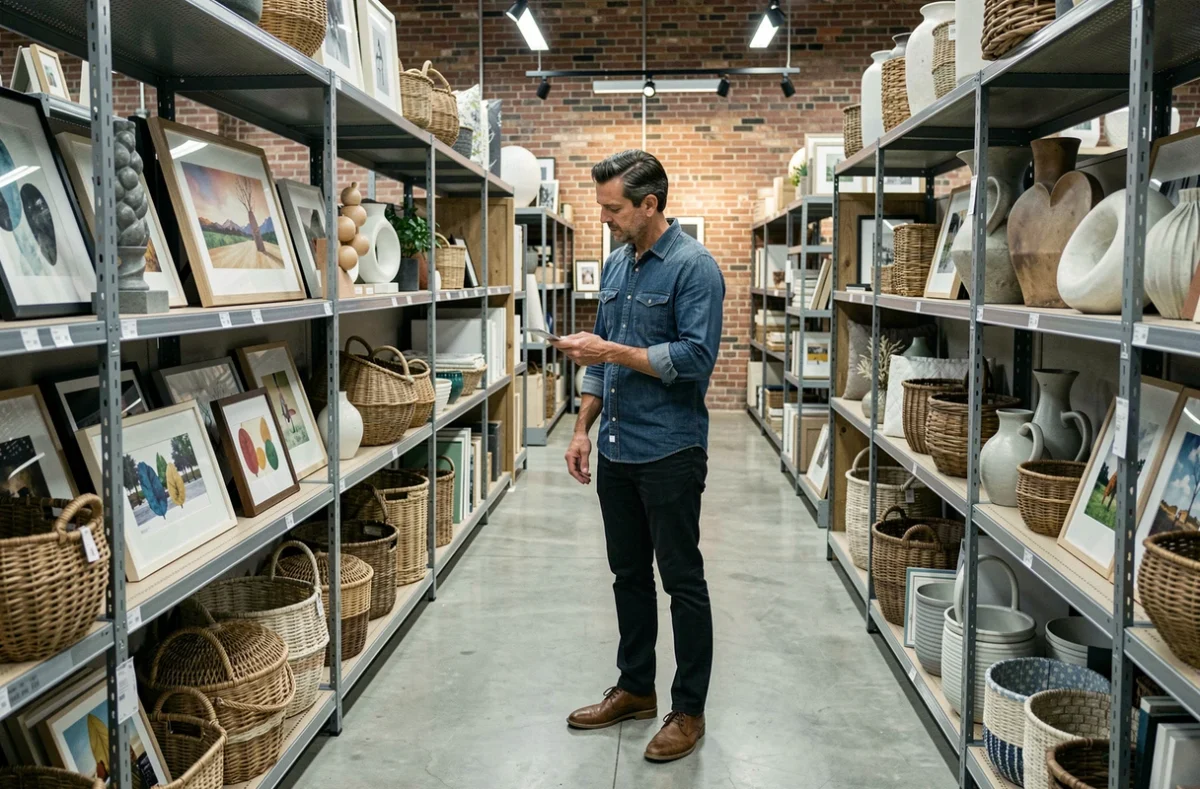
A decorative piece of furniture with a broken leg or damaged covering often ends up in the dump. The French extended producer responsibility (REP) system, strengthened by the AGEC law, now encourages manufacturers to integrate reparability from the design stage. Eco-modulations take into account the availability of spare parts, recyclability, and the presence of hazardous substances.
Specifically, when comparing two living room furniture pieces or two light fixtures, ask yourself these questions:
- Are spare parts (legs, lampshades, hinges) available for separate sale?
- Can the main material be sanded, repainted, or covered without degradation?
- Does the manufacturer offer a repair or take-back service?
A reparable item costs less over its total lifespan than a disposable object bought three times. This criterion weighs more on the actual budget than the price displayed in the store. By browsing the equipment on Vivez Décorez, you will find ranges designed to last and adapt to different interior styles.
Second-hand decoration: an underestimated lever to transform a space
The French second-hand furniture market is growing due to the combined effects of constrained purchasing power, digital platforms, and environmental concerns. Brands are exploring take-back options upon delivery, second-hand corners, and the resale of refurbished furniture.
Second-hand is no longer a fallback option; it is a structural choice in decoration. A vintage solid oak sideboard, found for a fraction of the new price, adds character to a living room better than an industrial reproduction. A 1970s workshop lamp creates a focal point that you won’t find in any catalog.

How to evaluate second-hand furniture before purchase
The classic trap: buying a second-hand decorative item without checking its structural integrity. Test the joints (drawers, doors, legs). Check for the absence of mold or signs of moisture under the surfaces. For textiles, run your hand over the fibers: a fabric that pills already in the store won’t hold up.
A well-inspected second-hand piece protects just as well as a new one, provided you don’t rely solely on the online photo. The trip is always worth it.
Coherence of materials and colors in each room
Accumulating decorative objects that individually please does not guarantee a harmonious interior. Coherence rests on two pillars: the color palette and the family of materials.
Why does this principle work? Because the eye first perceives the relationships between objects, not the objects themselves. A living room that mixes rattan, green velvet, and brushed steel tells three different stories. Reducing to two dominant materials (for example, light wood and linen) with a metallic accent is enough to create a fluid reading of the space.
- Choose a maximum of two to three colors per room, including walls and floors in the count
- Pair a warm material (wood, textile) with a cold material (metal, glass) to create contrast without overload
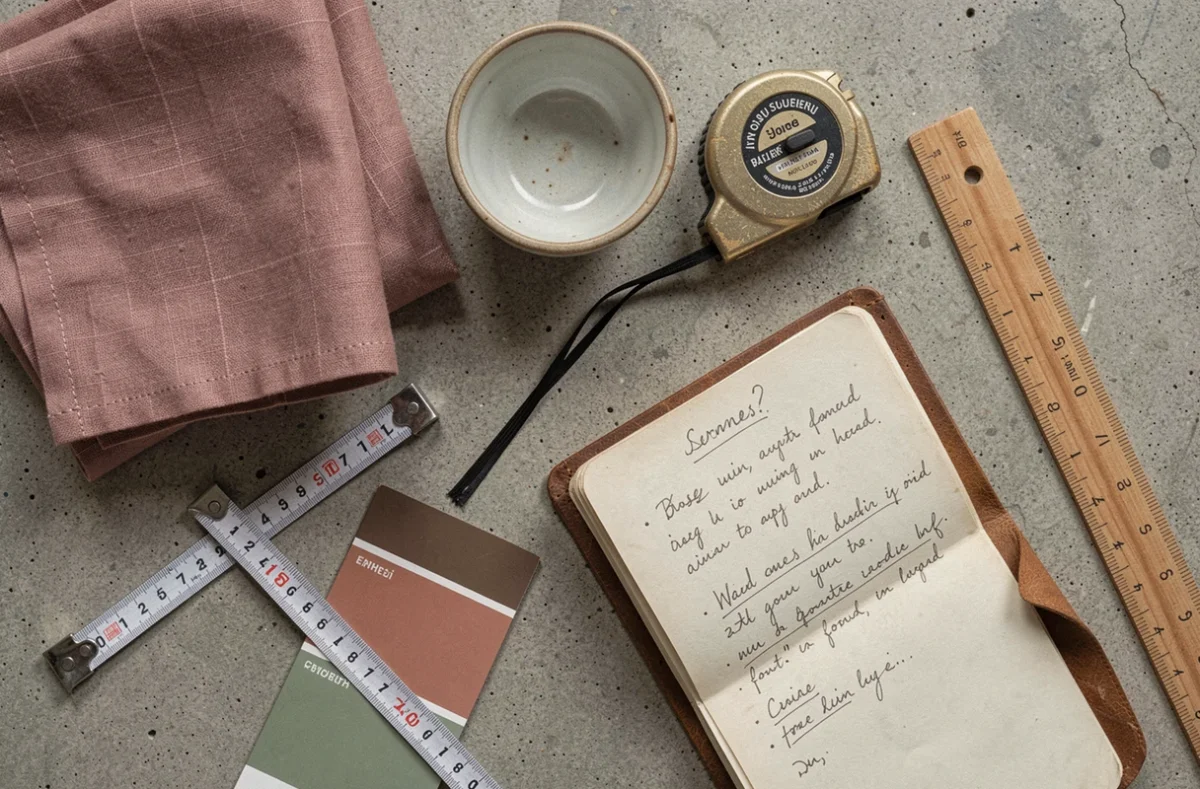
- Test a sample of fabric or paint in situ before purchasing, as the natural light in your home radically changes the perception of a color
Testing colors and materials at home before buying avoids most mistakes. A sample costs a few euros. A bad sofa costs several hundred.
Decoration budget: think in terms of usage cost, not purchase price
The displayed price of a decorative item reflects only part of its actual cost. A cheap light fixture whose specific bulb is expensive to replace, a particle board piece of furniture that needs to be replaced every three years, a textile that shrinks on the first wash: the usage cost includes lifespan, maintenance, and replacement.
Focus your budget on structural pieces (sofa, table, storage) and save on easily replaceable accessories (cushions, candles, frames). This distribution creates a solid interior that you can refresh each season without starting over.
A successful decoration project relies less on the number of items purchased than on the relevance of each choice. A space with five well-selected, durable, and coherent pieces will always look better than a room saturated with hastily bought accessories.