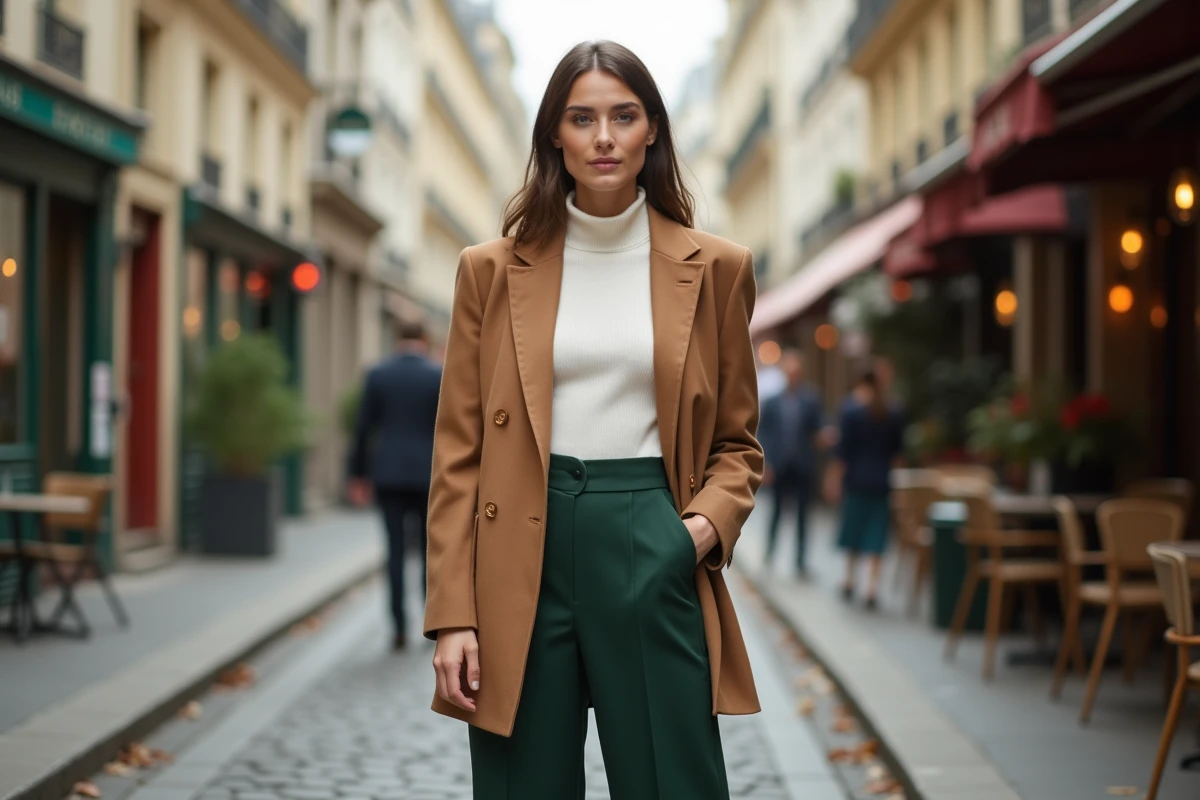
The fashion trends for 2024 are measured less by their aesthetic breaks than by the redistribution of codes among market segments. Which currents have truly influenced the collections, and which are merely media noise? A review of the structuring movements allows us to distinguish the sustainable axes from the seasonal gimmicks.
Accessible quiet luxury: a comparison of approaches brand by brand
The standout feature of the season does not come from the haute couture runways. It comes from the mid-range. Brands like COS, Arket, Massimo Dutti, and Uniqlo have structured their collections around clean basics, adopting an aesthetic previously reserved for The Row or Loro Piana.
The quiet luxury adapted for the general public is not limited to a beige color on a hanger. It represents a complete merchandising repositioning.
| Criterion | Mid-range brands (COS, Arket, Massimo Dutti) | Fast fashion brands (Zara, H&M) |
|---|---|---|
| Key pieces | Gray straight pants, beige trench coat, fine black knitwear | Similar versions, faster turnover |
| Dominant palette | Natural and soft colors: beige, khaki, brown, pastels | Broader palette, including bright colors |
| Positioning | Basics presented as inspired by quiet luxury | Mix of trends, no single editorial line |
| Cuts | Loose, fluid, clean lines | Varied according to micro-trends |
This table illustrates a shift: mid-range brands have captured the vocabulary of discreet luxury to structure their autumn-winter offerings, while fast fashion players have maintained a multi-trend approach. For those closely following these movements, the fashion page of Only Internet offers a complementary overview of the season’s inspirations.
Autumn-winter 2024 fashion trends: three axes against ten micro-trends
Competing articles often list eight to ten trends. By grouping the recurring signals from fashion shows and stylist analyses, three axes concentrate the majority of observed clothing choices.
- Structured romanticism: long dresses, fitted coats, fluid materials, but always paired with rigid pieces (tailored jacket, chunky-soled boots) to avoid an ethereal total look
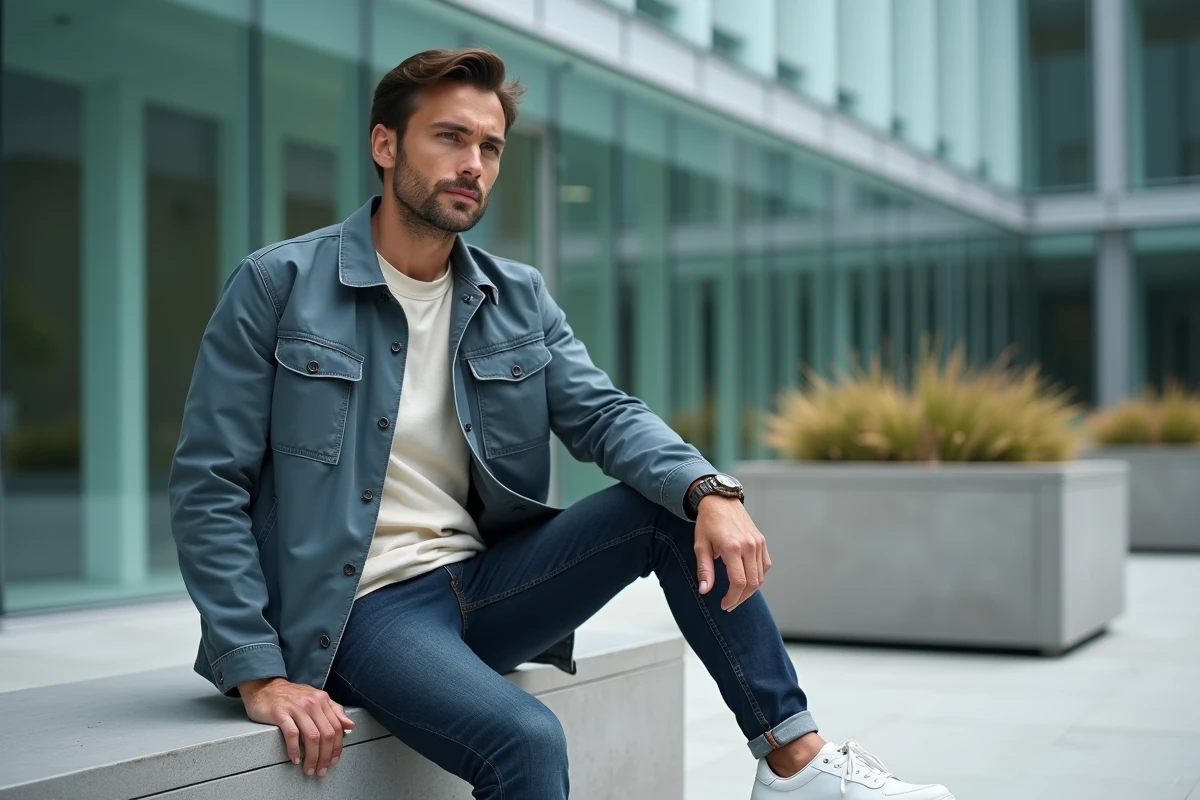
- Utility wardrobe and gorpcore: technical jackets, visible pockets, functional layering. This trend, already present in 2023, has established itself as a sustainable style rather than a seasonal whim
- Leopard print and bold patterns: leopard returns as the signature motif of the season, worn on coats, accessories, or in a total look. Bright colors and bold patterns contrast with the prevailing minimalism
In contrast to quiet luxury, these three axes focus on visibility. Gorpcore and leopard share an identical function: signaling a stylistic belonging without relying on logos.
The case of leopard: passing trend or wardrobe staple
Leopard print has already seen several cyclical returns. Its uniqueness in 2024 lies in its simultaneous adoption by luxury (Miu Miu) and streetwear. A leopard coat worn with straight jeans and white sneakers summarizes the season’s tension: visual assertion, simple clothing construction.
The question remains whether this motif will survive beyond winter. Leopard pieces in natural materials (wool, thick cotton) are more likely to remain in a wardrobe than low-cost synthetic versions.
Fashion and gaming collaborations: an underestimated channel of influence
Analyses of the 2024 collections rarely mention the impact of virtual worlds on street looks. Fashion capsules launched in Fortnite, Roblox, or League of Legends have generated a measurable return effect on real silhouettes.
Some brands have designed pieces for avatars before adapting them into physical versions. This reverse circuit (from virtual to real) alters the usual inspiration chain, where the runway preceded the street.
What gaming changes in daily style
Silhouettes derived from gaming favor graphic volumes, saturated colors, and oversized accessories. These visual codes are migrating into everyday attire for a segment of consumers, particularly those under thirty.
This phenomenon does not yet concern the majority of the market. However, it explains certain color and cut choices in autumn-winter collections that seem out of step with dominant trends. Gorpcore itself borrows part of its visual vocabulary from adventure and survival games.
Seasonal materials and colors: what the palettes reveal
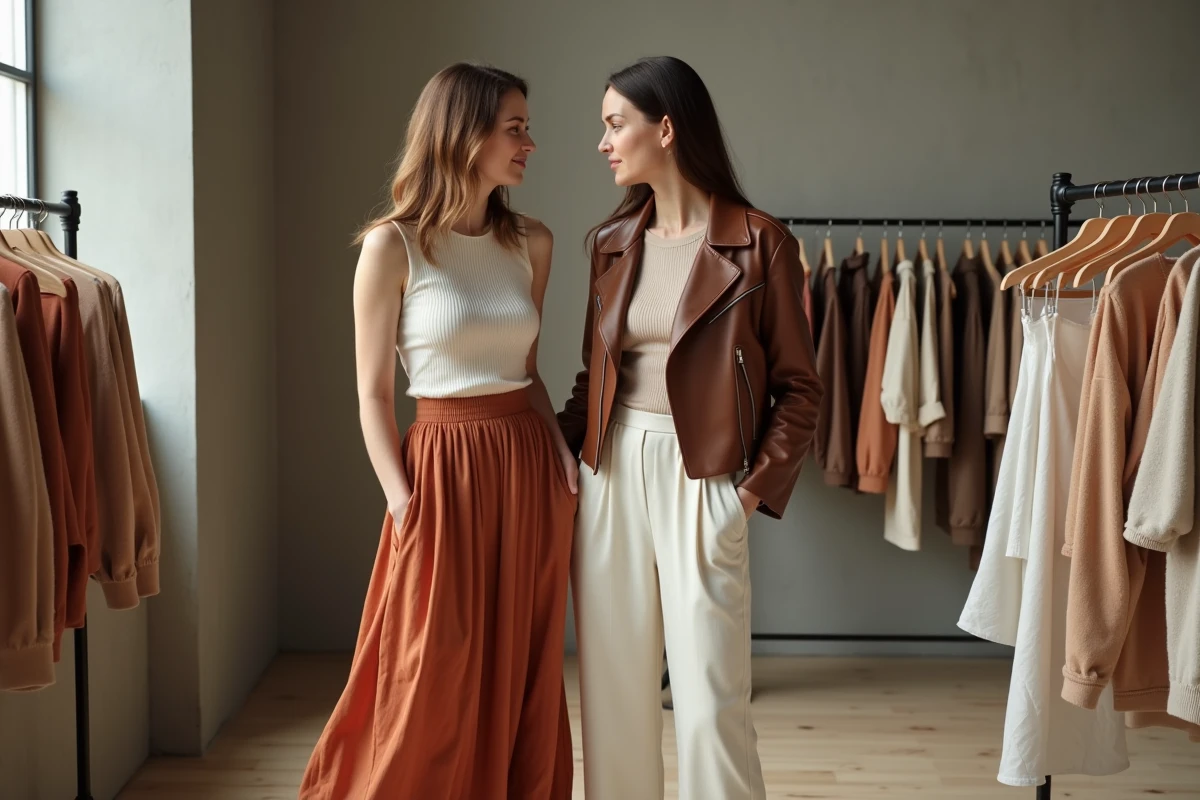
The autumn-winter 2024 palette is divided into two camps. On one side, the natural and soft colors (beige, khaki, brown, pastel shades) driven by the quiet luxury trend. On the other, the bright colors and bold patterns of the expressive wardrobe.
Natural materials are gaining ground in both camps. Linen, merino wool, thick cotton, and cashmere appear in collections at all price levels. This convergence on natural fibers reflects a demand for sustainability that transcends the eco-responsible segment.
Loose cuts versus fitted cuts
Loose and fluid cuts dominate the season’s wardrobes. Wide straight pants, oversized coats, voluminous dresses: the 2024 silhouette rejects tight-fitting styles. The few fitted pieces (fine knitwear, tailored shirts) serve as a counterpoint in a layered look, not as a central piece.
This preference for volume is partly explained by the influence of gorpcore and quiet luxury, two trends that share a rejection of constricting clothing. Post-pandemic comfort, often cited as a factor, remains difficult to isolate from other variables (size evolution, changing body norms).
The fashion trends for 2024 can be summarized as a tension between discretion (quiet luxury, natural materials, fluid cuts) and assertion (leopard, bright colors, gaming influences). The structuring fact remains the descent of high-end minimalism into the mid-range, a movement that redefines style markers well beyond a single season.