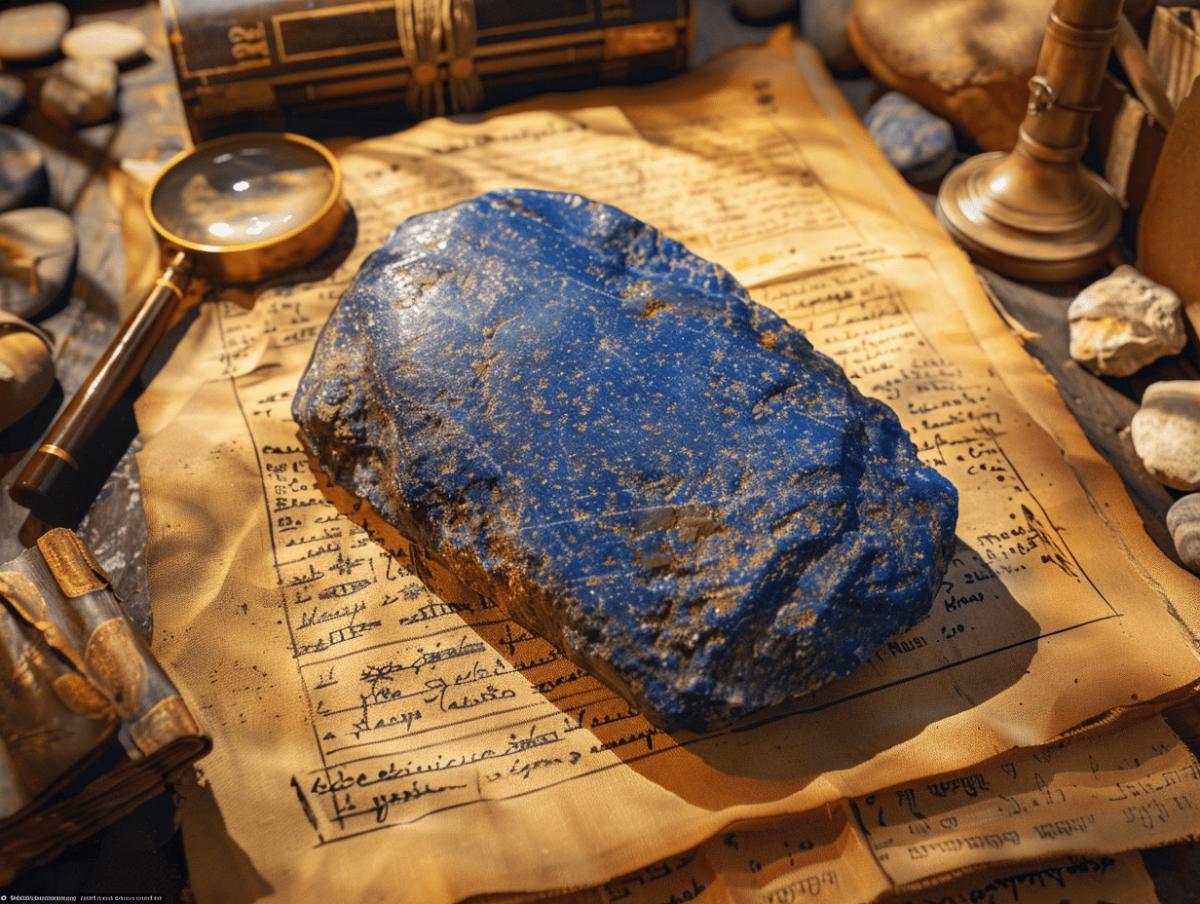
Lapis lazuli, this stone of deep blue adorned with golden pyrite flecks, has captivated humanity for millennia. Revered for its beauty and celestial luster, it has been shrouded in a mystical veil, becoming a symbol of power, wisdom, and protection. Popular beliefs attribute therapeutic and spiritual virtues to it, making it a cornerstone of lithotherapy. Science seeks to demystify these beliefs by examining its composition, origin, and physical properties. Between ancient myths and modern analyses, lapis lazuli remains an enigma, weaving a connection between the earth and the celestial infinite.
The Truth About Lapis Lazuli: Untangling Myths and Scientific Realities
The fascination with lapis lazuli dates back to ancient civilizations where its value transcended ornamentation to become sacred. Ancient Egypt, for example, dedicated it to deification: Osiris, the god of the afterlife, was represented by this stone. Powerful men and women draped themselves in it, seeking to associate with its divine virtues. This historical tradition, documented by the writings of Herodotus and Diodorus of Sicily, has contributed to forging a mythical aura around lapis lazuli, an aura that modern science seeks to clarify.
Consider the components of lapis lazuli: lazurite, calcite, and pyrite. These minerals, which give the stone its shades of azure blue and ultramarine, not only explain its color but also its quality and provenance. The price of lapis lazuli indeed depends on these attributes, establishing a link between market value and physical characteristics. The provenance, often Afghanistan and its Hindu Kush mountains, is crucial for the authenticity of the stone.
Cleaning and charging are maintenance methods advocated by lithotherapy enthusiasts, who see them as more than mere upkeep: a ritual to preserve or restore the alleged energetic properties of the stone. However, it is necessary to point out the dangers of lapis lazuli: improper maintenance or exposure to certain chemical substances can alter its structure and luster, thus threatening its durability.
Science aims to deconstruct the assumptions of lithotherapy, this practice that attributes healing powers and enhancement of consciousness and intuition to lapis lazuli. No scientific study has confirmed these claims to date, placing these beliefs in the realm of the mind rather than empirical evidence. Researchers encourage a critical approach, favoring observation and experimentation to clearly distinguish myth from reality.
Lapis Lazuli in Science and Culture: Uses and Meanings
Lapis lazuli, this stone of deep blue flecked with gold, has traversed ages and civilizations, leaving its mark in both scientific and cultural domains. In science, it stands out for its composition: lazurite, calcite, and pyrite, which give it its characteristic shades of azure blue and ultramarine. These chromatic properties have been scrutinized by geologists to trace the history of this stone, from the deposits of Afghanistan to the laboratories studying its attributes.
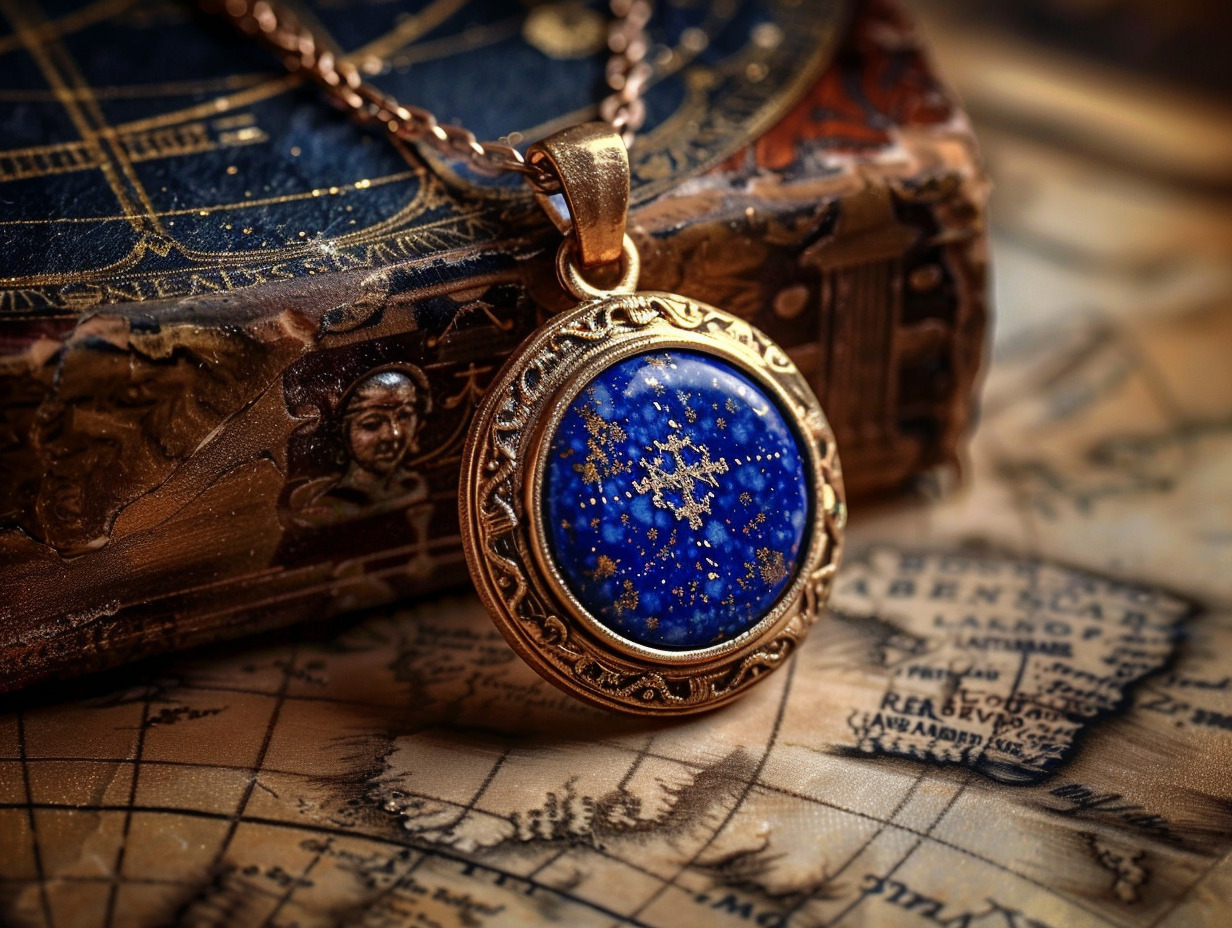
In the cultural realm, lapis lazuli is laden with multiple meanings. From Sumer and Egypt, it became the symbol of royalty and spirituality, a status that has endured through the centuries. Today, it finds its way into art and jewelry, blending into bracelets, earrings, necklaces, and pendants that adorn bodies as a sign of refinement and distinction. Its presence in the history of humanity is undeniable, granting it a prominent place in museums and art collections around the world.
The enthusiasm for lapis lazuli also extends to more esoteric spheres such as astrology and lithotherapy. It is believed to have affinities with zodiac signs like Libra, Sagittarius, and Gemini, and some attribute to it the ability to resonate with the third eye chakra, enhancing consciousness and intuition during meditative practices. These beliefs, although not supported by scientific research, reflect the enduring appeal of this stone to the collective imagination and its ability to embody values that transcend pure aesthetics.